
₨5,995.00 Original price was: ₨5,995.00.₨1,350.00Current price is: ₨1,350.00.


₨9,000.00 Original price was: ₨9,000.00.₨1,695.00Current price is: ₨1,695.00.
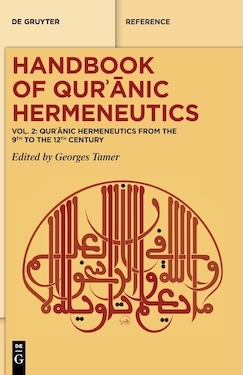
Qurʾānic Hermeneutics from the 9th to the 12th Century
ISBN
Publisher
Imprint
Year Published
Print Length
Format
SKU
₨49,550.00 Original price was: ₨49,550.00.₨2,995.00Current price is: ₨2,995.00.
Description
From the ninth to the early thirteenth century, Qurʾānic hermeneutics developed into a rich and methodologically sophisticated field characterized by both continuity and diversity. A central feature of this period was a strong commitment to authentic transmission, expressed through the careful use of chains of authority to preserve prophetic reports and early interpretive traditions. Alongside this concern for reliability, linguistic and philological analysis became indispensable tools for interpreting the Qurʾān’s language and stylistic features.Exegetical works of the period display a high degree of systematic organization, either through comprehensive, verse-by-verse commentaries or through expansive thematic and analytical treatments, all while consistently acknowledging the Qurʾān’s multilayered meanings. Overall, this period represents a formative and dynamic era in Qurʾānic hermeneutics, grounded in shared methodological principles yet responsive to evolving intellectual, cultural, and political contexts. The result is a plural and enduring interpretive tradition