
₨1,495.00


₨1,495.00
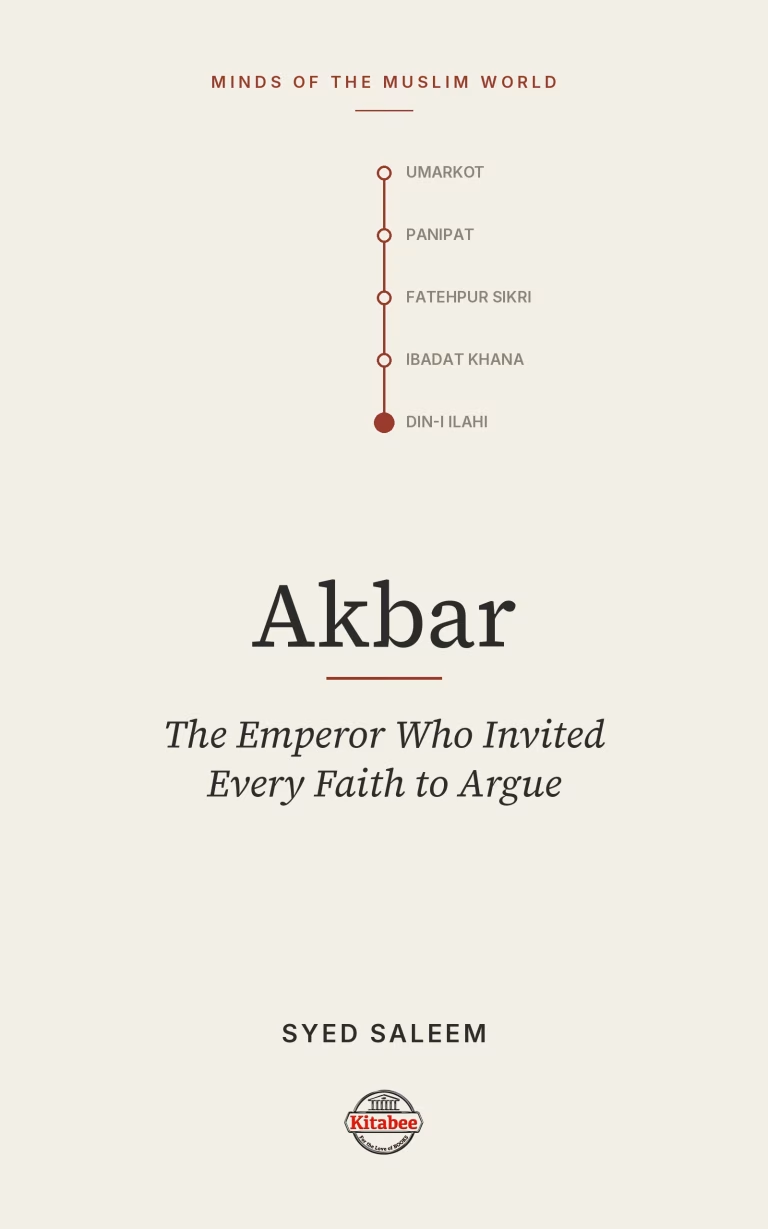
Akbar (Minds of the Muslim World)
ISBN
Publisher
Imprint
Year Published
Print Length
Format
SKU
₨1,495.00
Description
Akbar (1542–1605), the third Mughal emperor of India, was one of the most influential rulers in South Asian history. Ascending the throne in 1556 at the age of thirteen, he inherited an empire threatened by political rivals and regional instability. Through military campaigns, strategic alliances, and administrative reforms, he transformed the Mughal state into a powerful and enduring empire spanning much of the Indian subcontinent. His political acumen and ability to incorporate diverse communities into imperial governance helped establish the foundations of Mughal rule that would flourish for generations.
This volume explores Akbar’s remarkable approach to governance, religious policy, and cultural patronage. He developed an administrative system that strengthened imperial authority while drawing talented officials from different ethnic and religious backgrounds. His alliances with Rajput rulers helped consolidate Mughal power, while his court became a centre of artistic, literary, and architectural achievement. Akbar also pursued an ambitious programme of religious discussion, inviting Muslim scholars, Hindu thinkers, Jains, Christians, and others to participate in debates at his court. His policies of sulh-i kul, or universal peace, sought to promote political stability across religious boundaries. His experiments in religious thought, including the controversial Din-i Ilahi, remain subjects of historical discussion and interpretation.
Part of the Minds of the Muslim World series, this book examines Akbar’s achievements, ambitions, and complex legacy. His reign offers a compelling perspective on empire-building, cultural exchange, and the challenges of governing a religiously diverse society, while illuminating a formative period in the history of the Muslim world and the Indian subcontinent.
Praise and Reviews
About the Author
Akbar (Minds of the Muslim World)
Description
Akbar (1542–1605), the third Mughal emperor of India, was one of the most influential rulers in South Asian history. Ascending the throne in 1556 at the age of thirteen, he inherited an empire threatened by political rivals and regional instability. Through military campaigns, strategic alliances, and administrative reforms, he transformed the Mughal state into a powerful and enduring empire spanning much of the Indian subcontinent. His political acumen and ability to incorporate diverse communities into imperial governance helped establish the foundations of Mughal rule that would flourish for generations.
This volume explores Akbar’s remarkable approach to governance, religious policy, and cultural patronage. He developed an administrative system that strengthened imperial authority while drawing talented officials from different ethnic and religious backgrounds. His alliances with Rajput rulers helped consolidate Mughal power, while his court became a centre of artistic, literary, and architectural achievement. Akbar also pursued an ambitious programme of religious discussion, inviting Muslim scholars, Hindu thinkers, Jains, Christians, and others to participate in debates at his court. His policies of sulh-i kul, or universal peace, sought to promote political stability across religious boundaries. His experiments in religious thought, including the controversial Din-i Ilahi, remain subjects of historical discussion and interpretation.
Part of the Minds of the Muslim World series, this book examines Akbar’s achievements, ambitions, and complex legacy. His reign offers a compelling perspective on empire-building, cultural exchange, and the challenges of governing a religiously diverse society, while illuminating a formative period in the history of the Muslim world and the Indian subcontinent.