
₨1,495.00


₨1,495.00
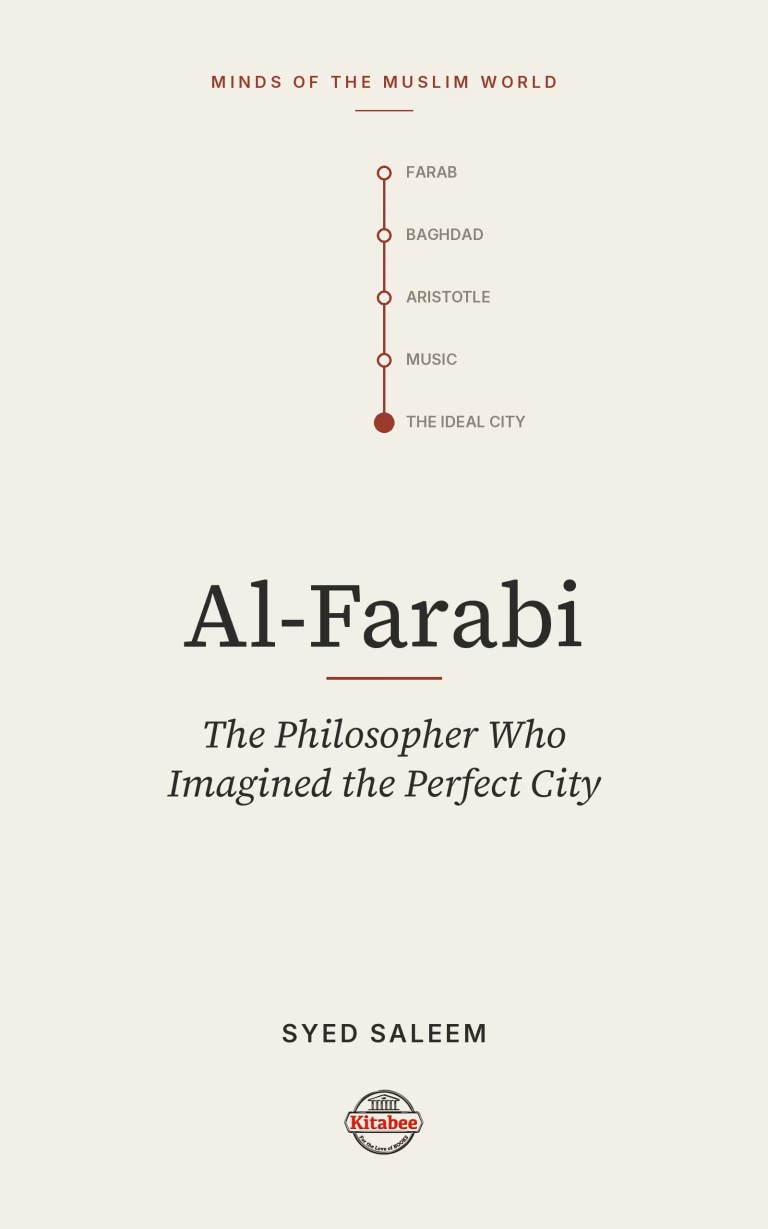
Al-Farabi (Minds of the Muslim World)
ISBN
Publisher
Imprint
Year Published
Print Length
Format
SKU
₨1,495.00
Description
Al-Farabi (c. 870–950), known in the Latin West as Alpharabius, was a philosopher, logician, political theorist, and musicologist whose work helped shape the development of philosophy in the medieval Muslim world. Born in the region of Farab in Central Asia, he pursued his intellectual career in major centres of learning, including Baghdad, where Greek philosophical traditions were being translated, studied, and integrated into Islamic intellectual life. Drawing inspiration from Plato and Aristotle while engaging with Islamic theology and metaphysics, Al-Farabi sought to reconcile reason, revelation, and the pursuit of human perfection. His extraordinary range of interests earned him the title al-Mu’allim al-Thani, or the Second Teacher, after Aristotle, reflecting his profound influence on subsequent generations of Muslim and European thinkers.
This volume explores Al-Farabi’s philosophical vision and his contributions to logic, metaphysics, ethics, political philosophy, and the theory of music. Among his most significant works is The Virtuous City, in which he describes an ideal society guided by a ruler whose wisdom and moral qualities enable citizens to achieve genuine happiness. Drawing upon Plato’s political philosophy and Aristotle’s ethical thought, he examined the relationship between individual virtue, intellectual development, and the common good. His writings also investigated the nature of the intellect, the structure of the universe, and the relationship between philosophy and religion, proposing that philosophical understanding and religious expression could communicate truths through different forms. Beyond philosophy, his influential treatises on music explored the mathematical principles of sound, musical composition, and the emotional effects of melody, demonstrating the breadth of his intellectual achievement.
Part of the Minds of the Muslim World series, this book examines Al-Farabi’s life, ideas, and enduring contribution to the history of philosophy. His work helped establish a sophisticated philosophical tradition within Islamic civilization and influenced later thinkers, including Ibn Sina and Ibn Rushd, while his writings also reached medieval European scholarship through Latin translations. By engaging critically with the intellectual heritage of ancient Greece and adapting it to the questions of his own age, Al-Farabi helped shape debates about reason, faith, political authority, education, and the nature of human happiness. His legacy offers a compelling insight into the cosmopolitan intellectual culture of the medieval Muslim world and its central role in the transmission and transformation of philosophical knowledge.
Praise and Reviews
About the Author
Al-Farabi (Minds of the Muslim World)
Description
Al-Farabi (c. 870–950), known in the Latin West as Alpharabius, was a philosopher, logician, political theorist, and musicologist whose work helped shape the development of philosophy in the medieval Muslim world. Born in the region of Farab in Central Asia, he pursued his intellectual career in major centres of learning, including Baghdad, where Greek philosophical traditions were being translated, studied, and integrated into Islamic intellectual life. Drawing inspiration from Plato and Aristotle while engaging with Islamic theology and metaphysics, Al-Farabi sought to reconcile reason, revelation, and the pursuit of human perfection. His extraordinary range of interests earned him the title al-Mu’allim al-Thani, or the Second Teacher, after Aristotle, reflecting his profound influence on subsequent generations of Muslim and European thinkers.
This volume explores Al-Farabi’s philosophical vision and his contributions to logic, metaphysics, ethics, political philosophy, and the theory of music. Among his most significant works is The Virtuous City, in which he describes an ideal society guided by a ruler whose wisdom and moral qualities enable citizens to achieve genuine happiness. Drawing upon Plato’s political philosophy and Aristotle’s ethical thought, he examined the relationship between individual virtue, intellectual development, and the common good. His writings also investigated the nature of the intellect, the structure of the universe, and the relationship between philosophy and religion, proposing that philosophical understanding and religious expression could communicate truths through different forms. Beyond philosophy, his influential treatises on music explored the mathematical principles of sound, musical composition, and the emotional effects of melody, demonstrating the breadth of his intellectual achievement.
Part of the Minds of the Muslim World series, this book examines Al-Farabi’s life, ideas, and enduring contribution to the history of philosophy. His work helped establish a sophisticated philosophical tradition within Islamic civilization and influenced later thinkers, including Ibn Sina and Ibn Rushd, while his writings also reached medieval European scholarship through Latin translations. By engaging critically with the intellectual heritage of ancient Greece and adapting it to the questions of his own age, Al-Farabi helped shape debates about reason, faith, political authority, education, and the nature of human happiness. His legacy offers a compelling insight into the cosmopolitan intellectual culture of the medieval Muslim world and its central role in the transmission and transformation of philosophical knowledge.