
₨1,495.00


₨1,495.00
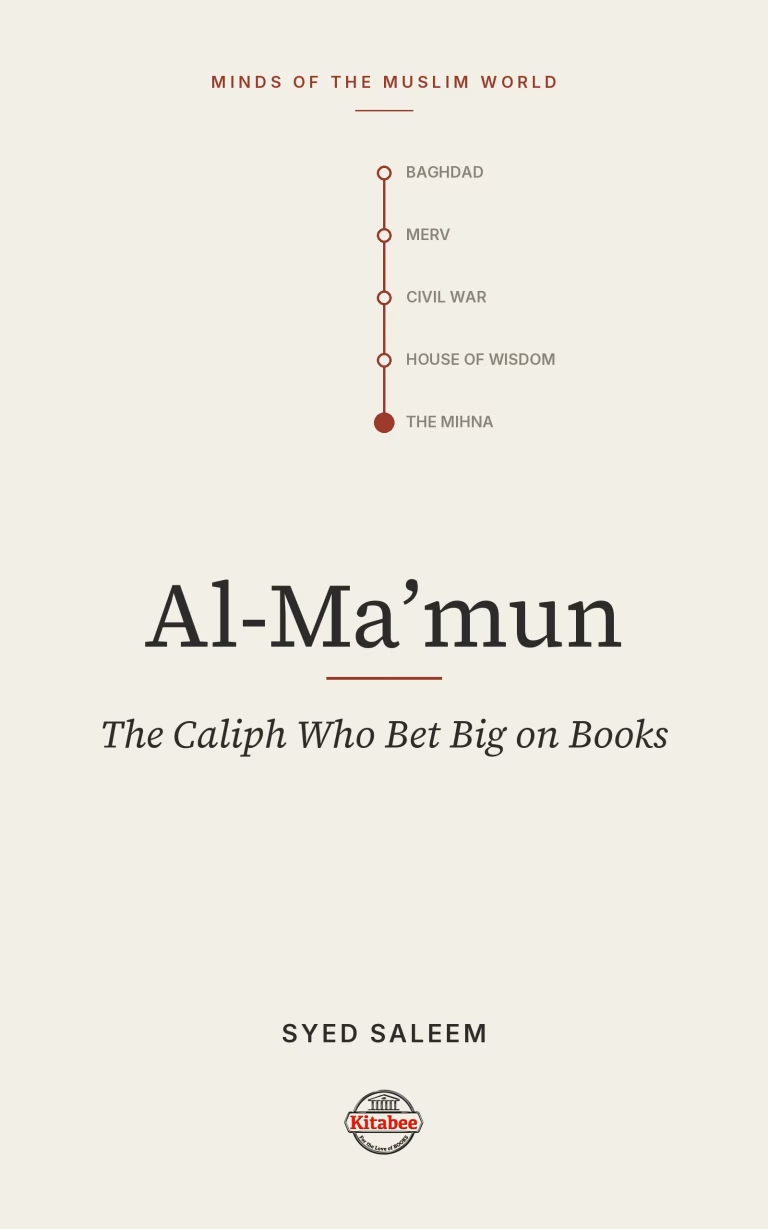
Al-Ma’mun (Minds of the Muslim World)
ISBN
Publisher
Imprint
Year Published
Print Length
Format
SKU
₨1,495.00
Description
Al-Ma’mun (786–833), the seventh Abbasid caliph, was one of the most intellectually ambitious rulers in Islamic history. The son of Harun al-Rashid, he came to power after a bitter civil war against his brother al-Amin, a conflict that exposed deep divisions within the Abbasid Empire. During his reign, al-Ma’mun strengthened caliphal authority while fostering an extraordinary period of scientific, philosophical, and literary activity. His court in Baghdad became a centre of scholarship, attracting Muslim and non-Muslim intellectuals whose work helped preserve, translate, and develop knowledge from Greek, Persian, Indian, and other traditions.
This volume explores al-Ma’mun’s role in the intellectual transformation of the Abbasid world. Closely associated with the Bayt al-Hikma, or House of Wisdom, he supported an environment in which astronomy, mathematics, medicine, philosophy, and theology flourished. Scholars translated important works into Arabic, laying foundations for further advances in scientific and philosophical inquiry. Yet al-Ma’mun’s legacy also includes a controversial attempt to impose a theological position on the nature of the Qur’an through the Mihna, an inquisition that tested the convictions of religious scholars and brought the caliphate into conflict with influential figures, including Ahmad ibn Hanbal.
Part of the Minds of the Muslim World series, this book examines al-Ma’mun’s achievements, ambitions, and contradictions. His reign reveals the remarkable intellectual energy of the Abbasid era while illuminating enduring tensions between political authority, religious belief, and the pursuit of knowledge.
Praise and Reviews
About the Author
Al-Ma’mun (Minds of the Muslim World)
Description
Al-Ma’mun (786–833), the seventh Abbasid caliph, was one of the most intellectually ambitious rulers in Islamic history. The son of Harun al-Rashid, he came to power after a bitter civil war against his brother al-Amin, a conflict that exposed deep divisions within the Abbasid Empire. During his reign, al-Ma’mun strengthened caliphal authority while fostering an extraordinary period of scientific, philosophical, and literary activity. His court in Baghdad became a centre of scholarship, attracting Muslim and non-Muslim intellectuals whose work helped preserve, translate, and develop knowledge from Greek, Persian, Indian, and other traditions.
This volume explores al-Ma’mun’s role in the intellectual transformation of the Abbasid world. Closely associated with the Bayt al-Hikma, or House of Wisdom, he supported an environment in which astronomy, mathematics, medicine, philosophy, and theology flourished. Scholars translated important works into Arabic, laying foundations for further advances in scientific and philosophical inquiry. Yet al-Ma’mun’s legacy also includes a controversial attempt to impose a theological position on the nature of the Qur’an through the Mihna, an inquisition that tested the convictions of religious scholars and brought the caliphate into conflict with influential figures, including Ahmad ibn Hanbal.
Part of the Minds of the Muslim World series, this book examines al-Ma’mun’s achievements, ambitions, and contradictions. His reign reveals the remarkable intellectual energy of the Abbasid era while illuminating enduring tensions between political authority, religious belief, and the pursuit of knowledge.