
₨1,495.00


₨1,495.00
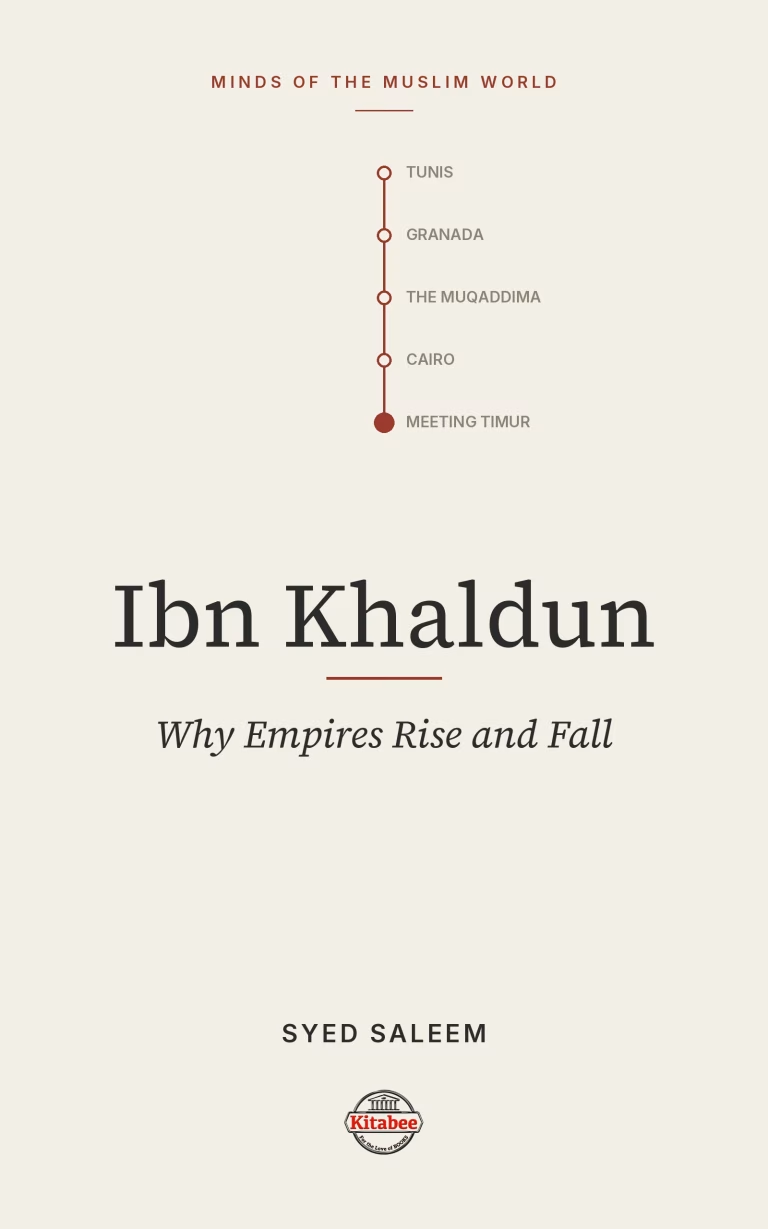
Ibn Khaldun (Minds of the Muslim World)
ISBN
Publisher
Imprint
Year Published
Print Length
Format
SKU
₨1,495.00
Description
Ibn Khaldun (1332–1406) was a North African historian, philosopher, judge, and political thinker whose ideas laid important foundations for the study of history and society. Born in Tunis into a family of Andalusian Arab origin, he received a rigorous education in Islamic law, theology, philosophy, and Arabic literature. Living through an era marked by political fragmentation, dynastic struggles, epidemics, and the decline of established powers across North Africa and the Mediterranean, Ibn Khaldun developed a distinctive approach to understanding the rise and fall of civilizations. His experiences in government, diplomacy, and scholarship gave him firsthand insight into the forces shaping political authority and social change.
This volume explores Ibn Khaldun’s intellectual vision and his groundbreaking contribution to historical and social thought. His most celebrated work, the Muqaddimah, introduced a systematic approach to understanding history by examining the economic, political, geographical, and social conditions that shape human societies. Central to his analysis was the concept of asabiyyah, or group solidarity, which he argued enabled dynasties and ruling groups to establish power, while growing luxury and political dependence could gradually weaken their cohesion. Challenging historians who accepted reports without examining their plausibility, Ibn Khaldun insisted that historical accounts should be tested against an understanding of how societies actually function. His ideas extended to taxation, labour, urban life, education, and the relationship between political power and economic prosperity.
Part of the Minds of the Muslim World series, this book examines Ibn Khaldun’s life, methods, and enduring intellectual legacy. His work occupies a distinctive place in Islamic scholarship, bridging traditional historical writing with a broader investigation of the patterns governing human civilization. Often regarded as a precursor to sociology, historiography, and political economy, he developed insights that continue to inform discussions of state formation, social cohesion, economic life, and the cyclical nature of political power. Ibn Khaldun’s thought offers a compelling perspective on the relationship between historical experience and intellectual inquiry, demonstrating how the study of the past can illuminate the underlying forces that shape societies and civilizations.
Praise and Reviews
About the Author
Ibn Khaldun (Minds of the Muslim World)
Description
Ibn Khaldun (1332–1406) was a North African historian, philosopher, judge, and political thinker whose ideas laid important foundations for the study of history and society. Born in Tunis into a family of Andalusian Arab origin, he received a rigorous education in Islamic law, theology, philosophy, and Arabic literature. Living through an era marked by political fragmentation, dynastic struggles, epidemics, and the decline of established powers across North Africa and the Mediterranean, Ibn Khaldun developed a distinctive approach to understanding the rise and fall of civilizations. His experiences in government, diplomacy, and scholarship gave him firsthand insight into the forces shaping political authority and social change.
This volume explores Ibn Khaldun’s intellectual vision and his groundbreaking contribution to historical and social thought. His most celebrated work, the Muqaddimah, introduced a systematic approach to understanding history by examining the economic, political, geographical, and social conditions that shape human societies. Central to his analysis was the concept of asabiyyah, or group solidarity, which he argued enabled dynasties and ruling groups to establish power, while growing luxury and political dependence could gradually weaken their cohesion. Challenging historians who accepted reports without examining their plausibility, Ibn Khaldun insisted that historical accounts should be tested against an understanding of how societies actually function. His ideas extended to taxation, labour, urban life, education, and the relationship between political power and economic prosperity.
Part of the Minds of the Muslim World series, this book examines Ibn Khaldun’s life, methods, and enduring intellectual legacy. His work occupies a distinctive place in Islamic scholarship, bridging traditional historical writing with a broader investigation of the patterns governing human civilization. Often regarded as a precursor to sociology, historiography, and political economy, he developed insights that continue to inform discussions of state formation, social cohesion, economic life, and the cyclical nature of political power. Ibn Khaldun’s thought offers a compelling perspective on the relationship between historical experience and intellectual inquiry, demonstrating how the study of the past can illuminate the underlying forces that shape societies and civilizations.