
₨1,495.00


₨2,095.00
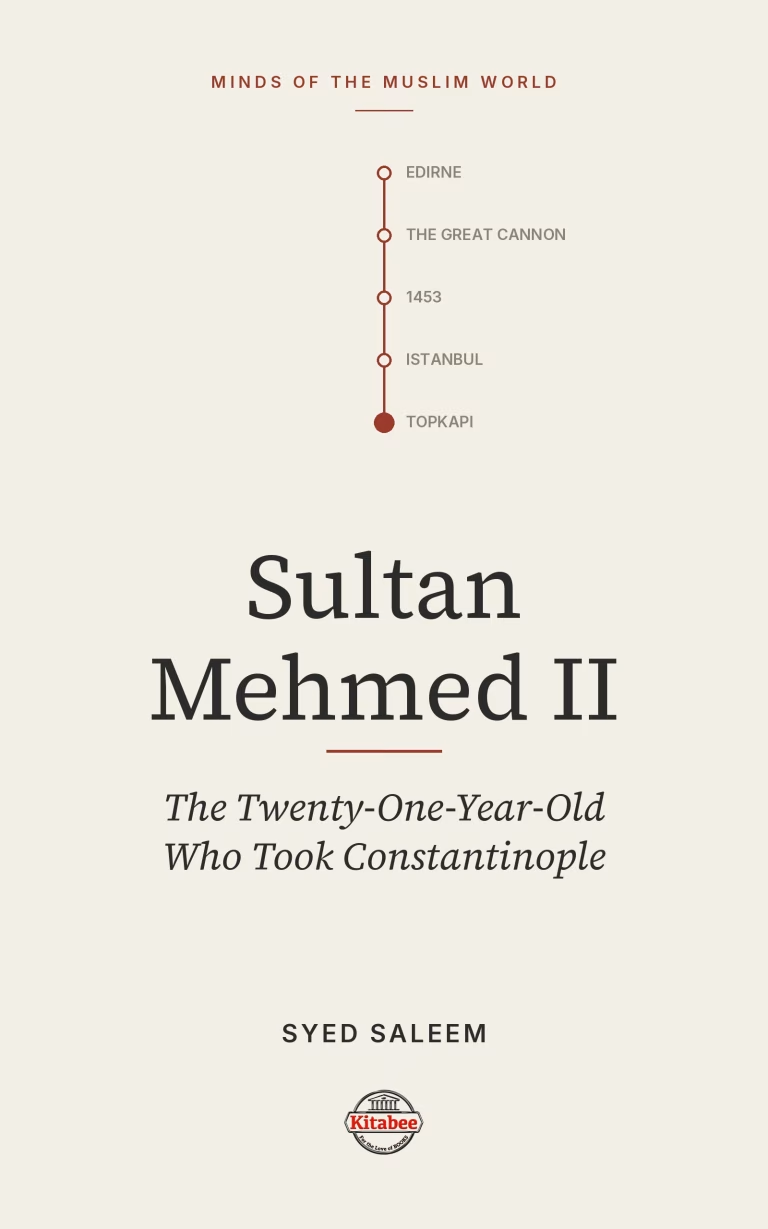
Sultan Mehmed II (Minds of the Muslim World)
ISBN
Publisher
Imprint
Year Published
Print Length
Format
SKU
₨1,495.00
Description
Sultan Mehmed II (1432–1481), widely known as Mehmed the Conqueror, was an Ottoman ruler, military strategist, and patron of learning whose reign transformed the political landscape of southeastern Europe and the eastern Mediterranean. Born in Edirne, the Ottoman capital, he was the son of Sultan Murad II and received an education in Islamic scholarship, military strategy, languages, and classical history. Ascending the throne for the first time in 1444 before returning to power permanently in 1451, Mehmed pursued an ambitious vision of imperial expansion and centralized rule. His determination to capture Constantinople, the historic capital of the Byzantine Empire, culminated in its conquest in 1453, an event that brought an end to the Byzantine state and established the city as the principal centre of Ottoman power.
This volume explores Mehmed II’s military campaigns, administrative reforms, and vision of empire. The conquest of Constantinople demonstrated his ability to combine innovative siege techniques, extensive artillery, naval operations, and careful strategic planning. Following the victory, he undertook the reconstruction and repopulation of the city, transforming it into a flourishing imperial capital that attracted Muslim, Christian, and Jewish communities. His campaigns extended Ottoman authority across the Balkans, Anatolia, and the Black Sea region, while his administrative policies strengthened the sultan’s control over land, taxation, and government. Mehmed also cultivated an intellectual and artistic environment at his court, supporting scholars, architects, poets, and historians while showing an interest in both Islamic learning and the classical heritage of Byzantium and Rome. His ambitions, however, were accompanied by prolonged warfare, political centralization, and the forceful incorporation of territories and populations into the expanding Ottoman state.
Part of the Minds of the Muslim World series, this book examines Mehmed II’s life, political vision, and enduring historical legacy. His conquest of Constantinople reshaped relations between Europe and the Muslim world, strengthened the Ottoman Empire’s position as a major imperial power, and gave the city a central role in Islamic political and cultural history. His efforts to establish a durable imperial administration helped lay foundations for the Ottoman state’s subsequent expansion, while his patronage encouraged the development of architecture, scholarship, and court culture. Remembered in Ottoman tradition as Fatih Sultan Mehmed, or Sultan Mehmed the Conqueror, he remains a significant figure in debates about empire, leadership, cultural transformation, and the transition from the medieval to the early modern world.
Praise and Reviews
About the Author
Sultan Mehmed II (Minds of the Muslim World)
Description
Sultan Mehmed II (1432–1481), widely known as Mehmed the Conqueror, was an Ottoman ruler, military strategist, and patron of learning whose reign transformed the political landscape of southeastern Europe and the eastern Mediterranean. Born in Edirne, the Ottoman capital, he was the son of Sultan Murad II and received an education in Islamic scholarship, military strategy, languages, and classical history. Ascending the throne for the first time in 1444 before returning to power permanently in 1451, Mehmed pursued an ambitious vision of imperial expansion and centralized rule. His determination to capture Constantinople, the historic capital of the Byzantine Empire, culminated in its conquest in 1453, an event that brought an end to the Byzantine state and established the city as the principal centre of Ottoman power.
This volume explores Mehmed II’s military campaigns, administrative reforms, and vision of empire. The conquest of Constantinople demonstrated his ability to combine innovative siege techniques, extensive artillery, naval operations, and careful strategic planning. Following the victory, he undertook the reconstruction and repopulation of the city, transforming it into a flourishing imperial capital that attracted Muslim, Christian, and Jewish communities. His campaigns extended Ottoman authority across the Balkans, Anatolia, and the Black Sea region, while his administrative policies strengthened the sultan’s control over land, taxation, and government. Mehmed also cultivated an intellectual and artistic environment at his court, supporting scholars, architects, poets, and historians while showing an interest in both Islamic learning and the classical heritage of Byzantium and Rome. His ambitions, however, were accompanied by prolonged warfare, political centralization, and the forceful incorporation of territories and populations into the expanding Ottoman state.
Part of the Minds of the Muslim World series, this book examines Mehmed II’s life, political vision, and enduring historical legacy. His conquest of Constantinople reshaped relations between Europe and the Muslim world, strengthened the Ottoman Empire’s position as a major imperial power, and gave the city a central role in Islamic political and cultural history. His efforts to establish a durable imperial administration helped lay foundations for the Ottoman state’s subsequent expansion, while his patronage encouraged the development of architecture, scholarship, and court culture. Remembered in Ottoman tradition as Fatih Sultan Mehmed, or Sultan Mehmed the Conqueror, he remains a significant figure in debates about empire, leadership, cultural transformation, and the transition from the medieval to the early modern world.