₨2,195.00
₨1,895.00
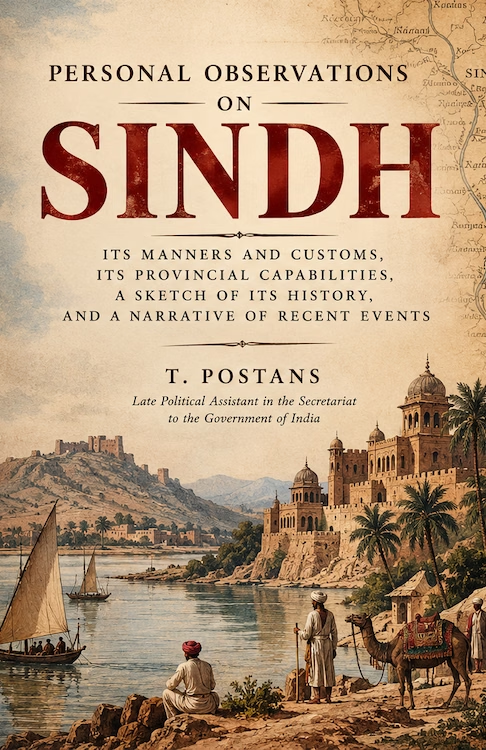
Personal Observations on Sindh: Its Manners and Customs, Its Provincial Capabilities
ISBN
Publisher
Imprint
Year Published
Print Length
Format
SKU
₨2,095.00
Description
First published in 1843, Personal Observations on Sindh by T. Postans is one of the earliest and most detailed accounts of the region written by a British official who lived and travelled extensively in Sindh during a pivotal period in its history.
Drawing on his experience as a political assistant in the Secretariat to the Government of India, Postans offers a vivid and insightful description of Sindh’s people, their manners and customs, the social and political structure of the province, and its economic potential. He also provides a narrative of recent events, including the annexation of Sindh, and reflects on its strategic importance within the broader context of the Indian subcontinent.
Combining careful observation with historical detail, the book remains a valuable source for understanding Sindh in the early nineteenth century—its geography, its communities, its resources, and the changes it underwent in the face of British expansion.
This edition makes an important historical work accessible once again to scholars, researchers, and all those interested in the history and heritage of Sindh.
Praise and Reviews
About the Author
Personal Observations on Sindh: Its Manners and Customs, Its Provincial Capabilities
Description
First published in 1843, Personal Observations on Sindh by T. Postans is one of the earliest and most detailed accounts of the region written by a British official who lived and travelled extensively in Sindh during a pivotal period in its history.
Drawing on his experience as a political assistant in the Secretariat to the Government of India, Postans offers a vivid and insightful description of Sindh's people, their manners and customs, the social and political structure of the province, and its economic potential. He also provides a narrative of recent events, including the annexation of Sindh, and reflects on its strategic importance within the broader context of the Indian subcontinent.
Combining careful observation with historical detail, the book remains a valuable source for understanding Sindh in the early nineteenth century—its geography, its communities, its resources, and the changes it underwent in the face of British expansion.
This edition makes an important historical work accessible once again to scholars, researchers, and all those interested in the history and heritage of Sindh.